Brown Patch vs. Other Lawn Diseases: How to Tell Them Apart
September 19, 2026
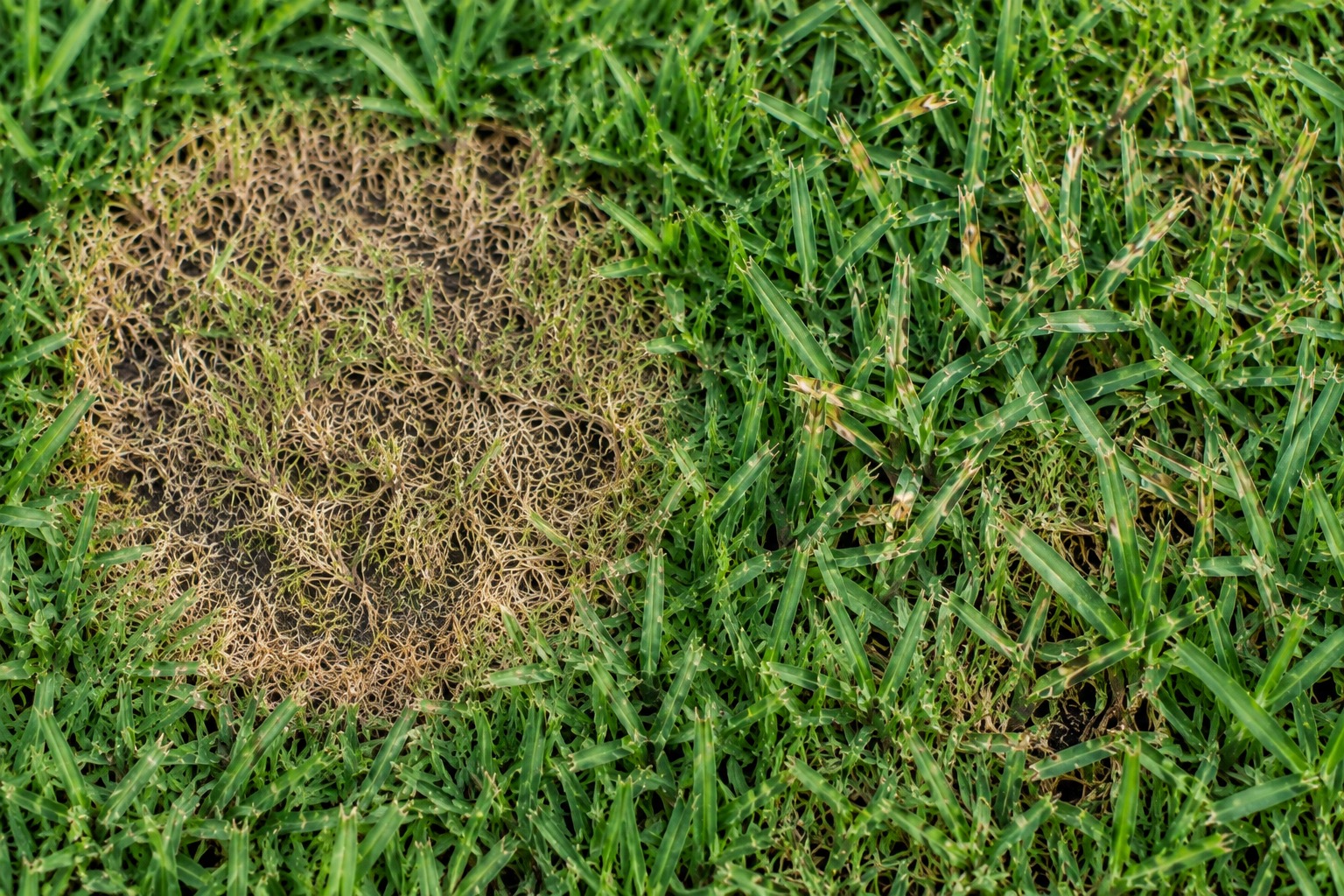
Not every brown or discolored patch in a St. Augustine lawn is brown patch. Several different lawn diseases and problems can look similar at a glance. Treating the wrong one usually means the real issue keeps going unaddressed.
Brown patch itself has one clear sign worth remembering first: a circular or ring-shaped pattern. Often there's a slightly different color right at the outer edge compared to the center. It shows up most in fall, when cool nights and warm, humid days create the exact conditions the fungus needs. If a patch is round and appeared during a cool, damp stretch of weather, brown patch is the most likely cause.
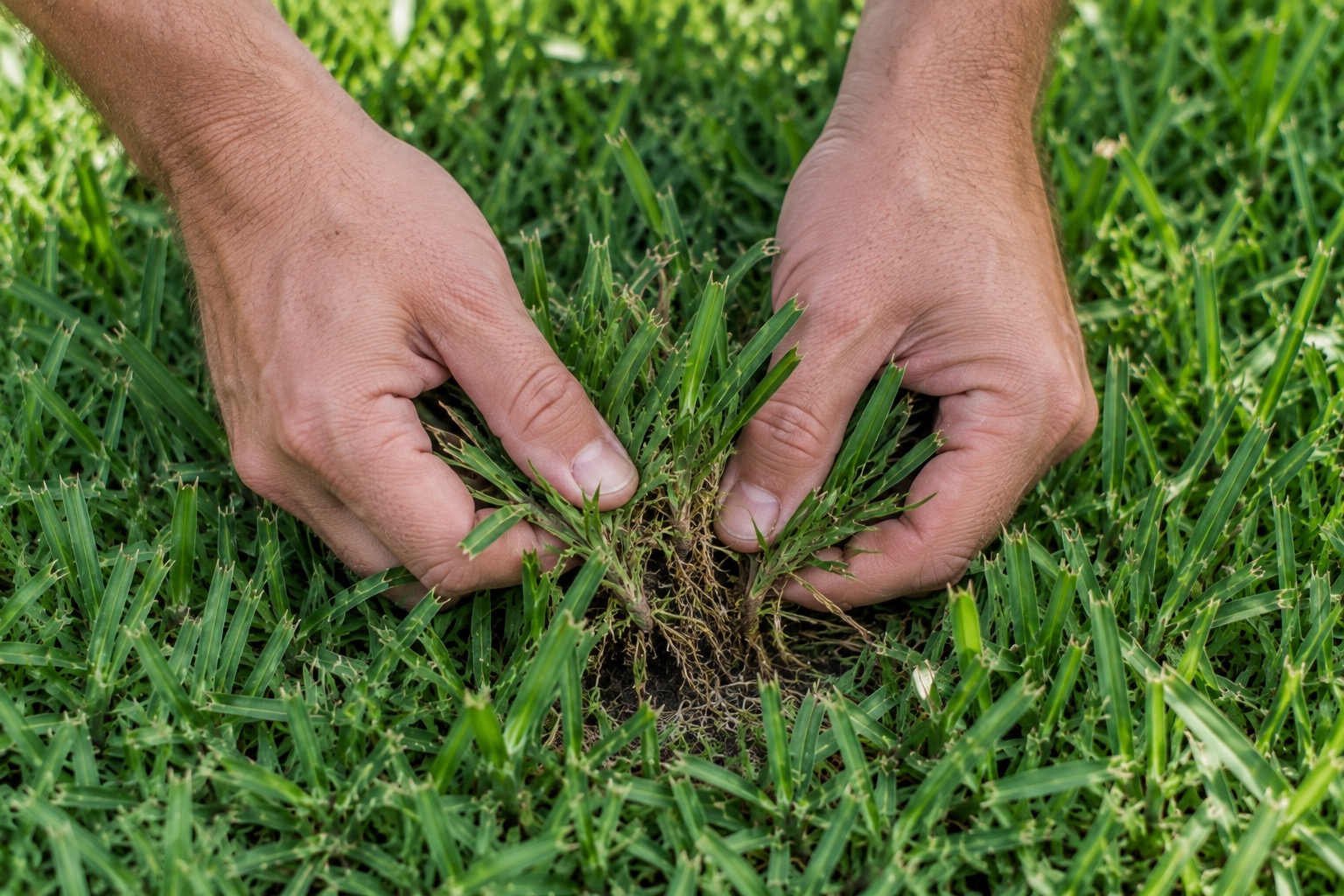
Take-all root rot looks different in one key way. It damages the actual root system, not just the blade near the soil line. Grass affected by take-all often pulls up easily with very little resistance, since the roots underneath have been genuinely damaged. Brown patch rarely does this. It typically leaves the roots intact even when the blades above look bad. A quick tug test on a few affected blades can help tell these two apart.
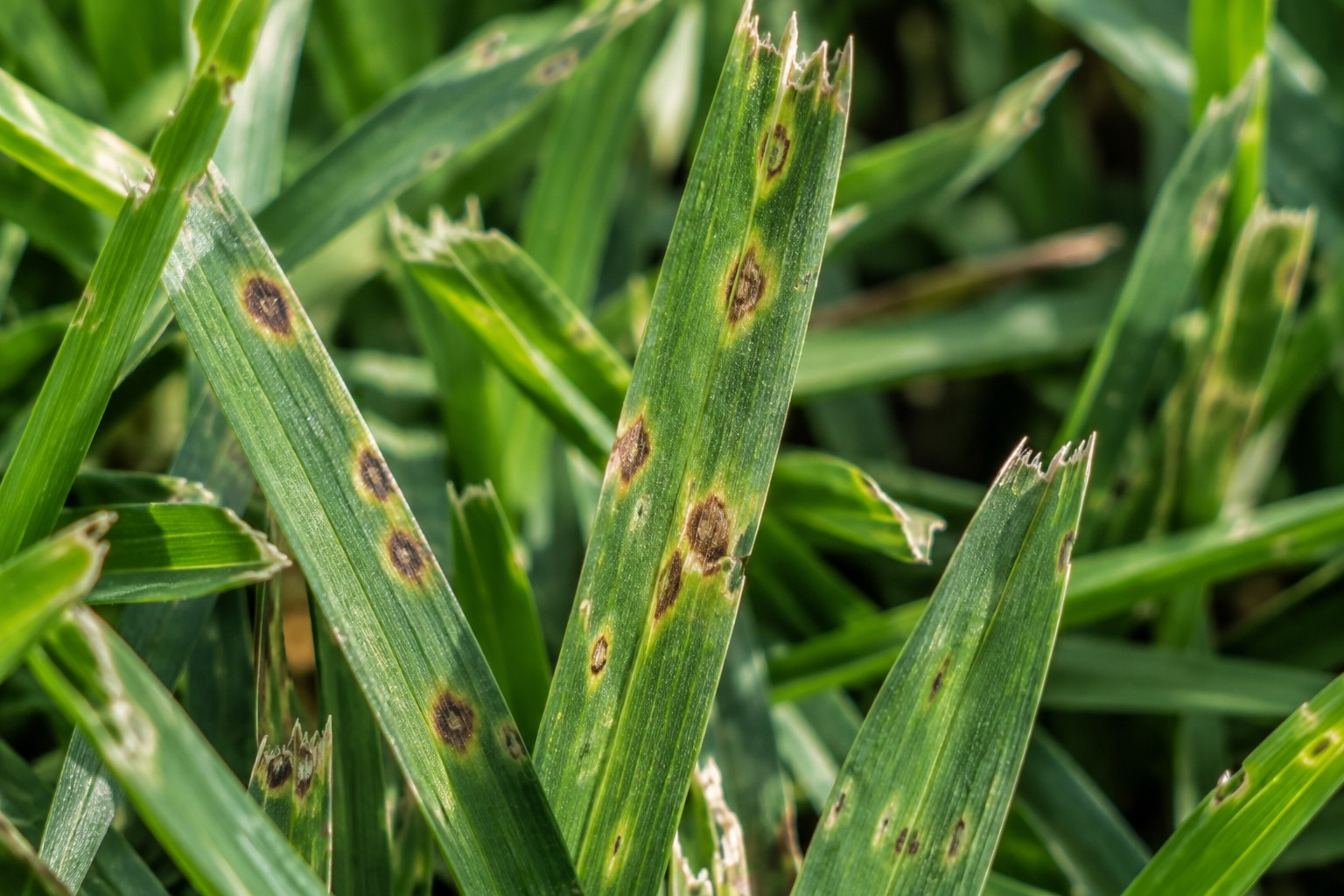
Gray leaf spot shows up as small, distinct spots directly on individual grass blades, rather than as a broader patch pattern. It tends to appear during hot, humid summer stretches rather than the cooler fall conditions brown patch prefers. Checking individual blades closely, rather than just looking at the overall patch shape, is the way to catch this difference.
Chinch bug damage is a common one to confuse with fungal disease, since both cause yellowing and browning. The real difference: chinch bug damage doesn't respond to watering at all, since insects are the actual cause, not a lack of moisture or a fungus. It also tends to start in the hottest, sunniest part of a yard, not the shadier spots fungal diseases prefer.
Simple drought stress is often the first guess for any brown patch of grass, and it's worth ruling out before assuming something more complicated. Drought-stressed grass typically responds within a day or two of a good, deep watering. A patch that stays exactly the same after watering is worth a second look. So is one shaped like a distinct circle rather than a general dry area. Both point toward something other than simple dryness.
Getting the actual cause right matters more than jumping straight to a product. A fungicide does nothing for chinch bugs. Extra watering can even make a fungal problem worse instead of better. A few minutes checking the shape, the season, and how the grass responds to water usually points clearly toward the real cause.
How is gray leaf spot different from brown patch?
Gray leaf spot shows up as small, distinct spots on individual grass blades, not as a broader circular patch. It also tends to appear during hot, humid summer weather rather than the cooler, damp fall conditions that trigger brown patch.
What's the difference between brown patch and take-all root rot?
Take-all root rot damages the actual root system, so affected grass often pulls up easily with little resistance. Brown patch usually leaves the roots intact even when the blades above look damaged, making a quick tug test a useful way to tell them apart.
Can chinch bug damage be mistaken for a fungal lawn disease?
Yes — both cause yellowing and browning grass. The clearest tell is location: chinch bug damage usually starts in the hottest, sunniest part of the yard, while fungal diseases like brown patch tend to show up in shadier, more humid spots instead.