How to Treat Brown Patch on St. Augustine Grass
September 18, 2026
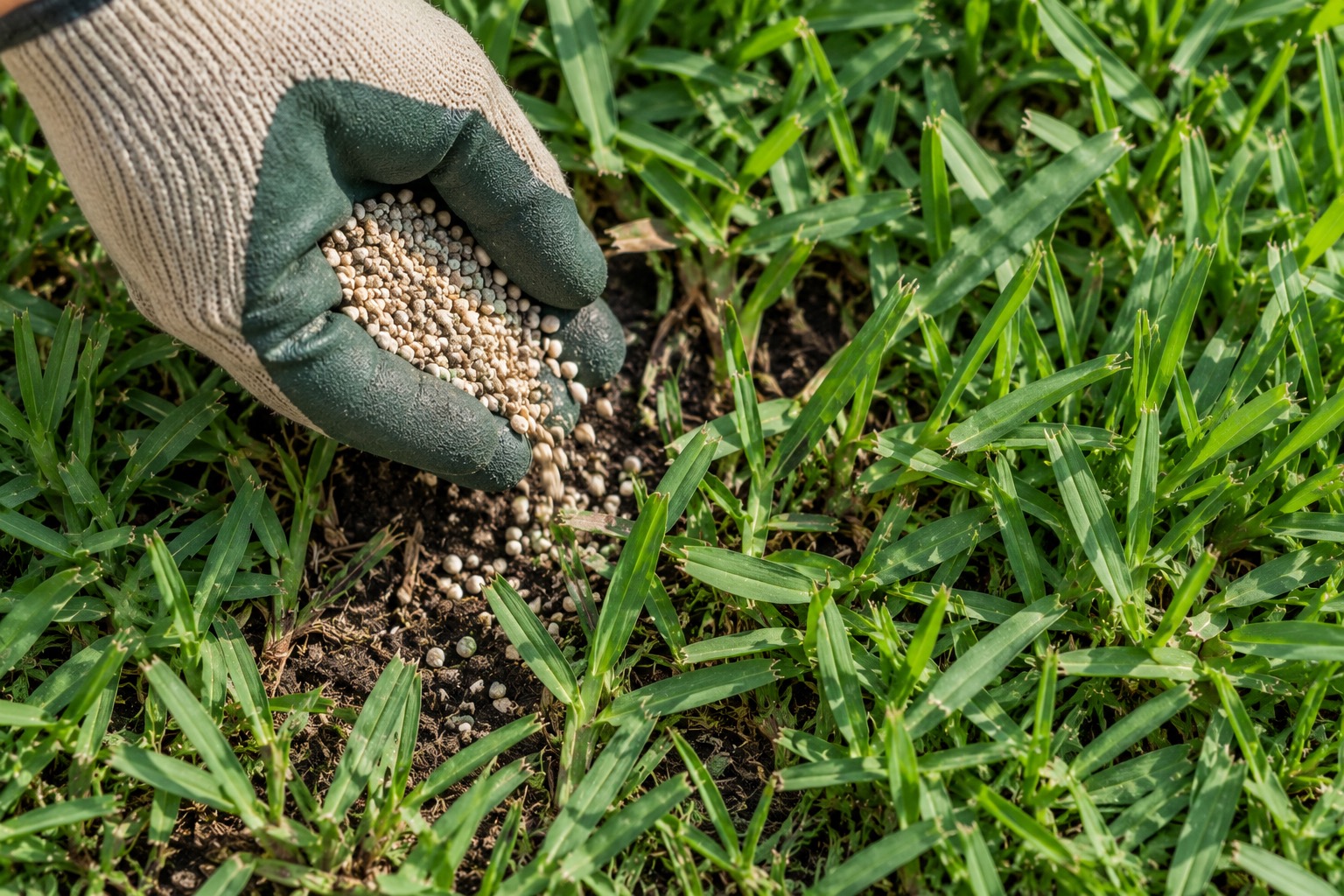
Treating brown patch starts with confirming that's actually what's happening, since the fix depends on getting that right. Once confirmed, treatment usually comes down to a fungicide application combined with a few changes to watering and mowing.
A fungicide labeled for brown patch, sometimes listed as large patch or Rhizoctonia on the label, is the direct treatment. These products need to reach the base of the grass blade, near the soil line, since that's where the fungus is active. A light surface spray that doesn't reach that level won't do much. Watering the fungicide in lightly afterward, following the product's instructions, usually helps it get where it needs to go.
Watering habits need to change alongside any fungicide treatment, or the fungus has a good chance of coming back. Watering in the evening keeps grass wet overnight. That's exactly the condition the fungus needs to keep spreading. Morning watering gives the lawn the whole day to dry out instead. That removes one of the main things feeding the problem.
Mowing height matters during an active outbreak too. Cutting St. Augustine too short removes blade tissue the grass needs to recover. It also makes existing damage more visible, since there's less healthy growth to offset it. Keeping mowing height on the taller end of St. Augustine's normal range during treatment gives the lawn more of a buffer while it heals.
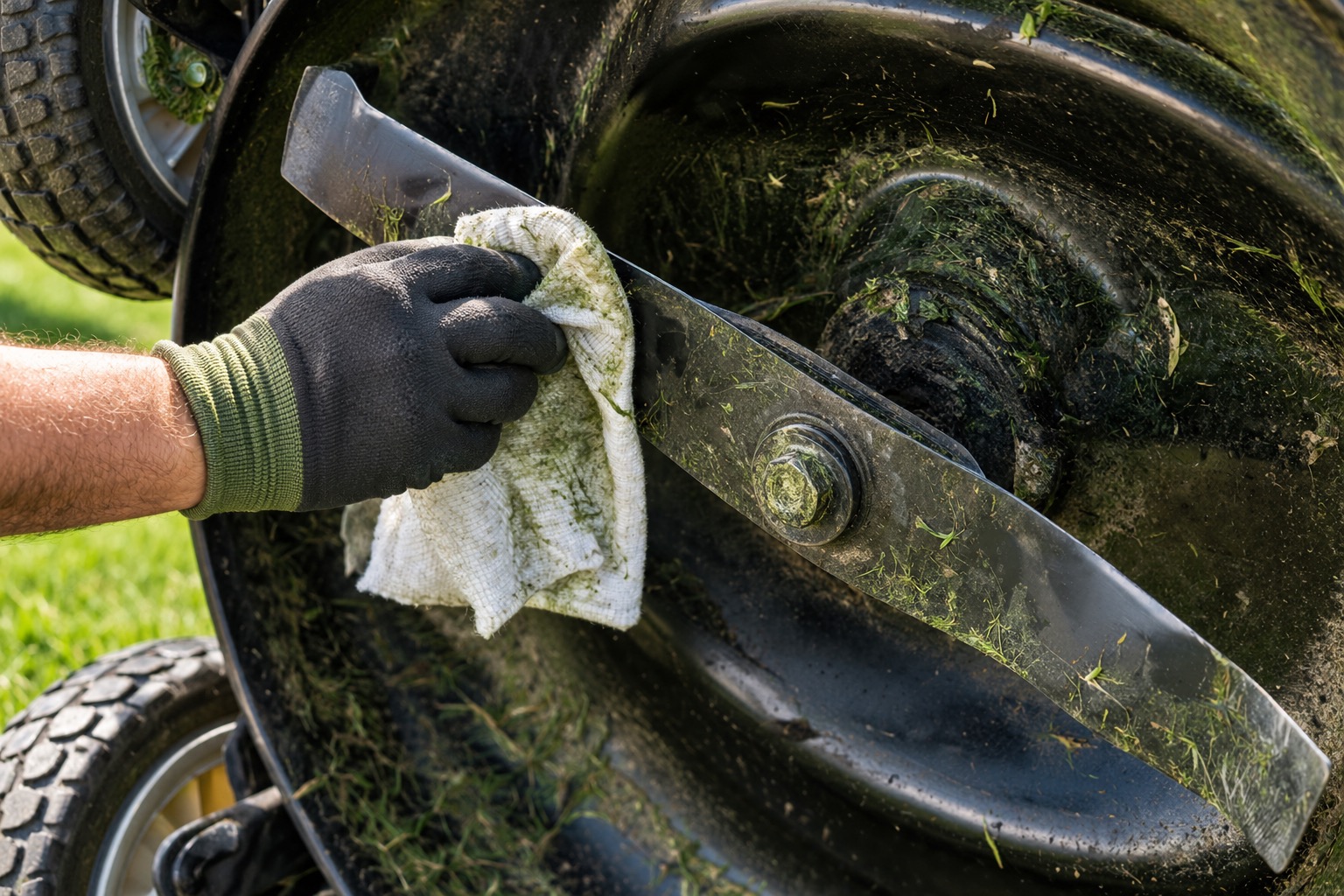
Avoid mowing over an infected patch and then moving straight to a healthy part of the lawn without cleaning the mower deck first. Wet clippings from an infected area can carry fungal spores to other parts of the yard. That spreads the same problem to spots that were previously fine.
Patience matters more than people expect. A treated patch doesn't bounce back overnight. The fungus usually damages grass at the blade base rather than killing the root. Recovery often takes several weeks as new growth fills in the area. A patch that's still discolored a few days after treatment isn't necessarily a sign the treatment failed.
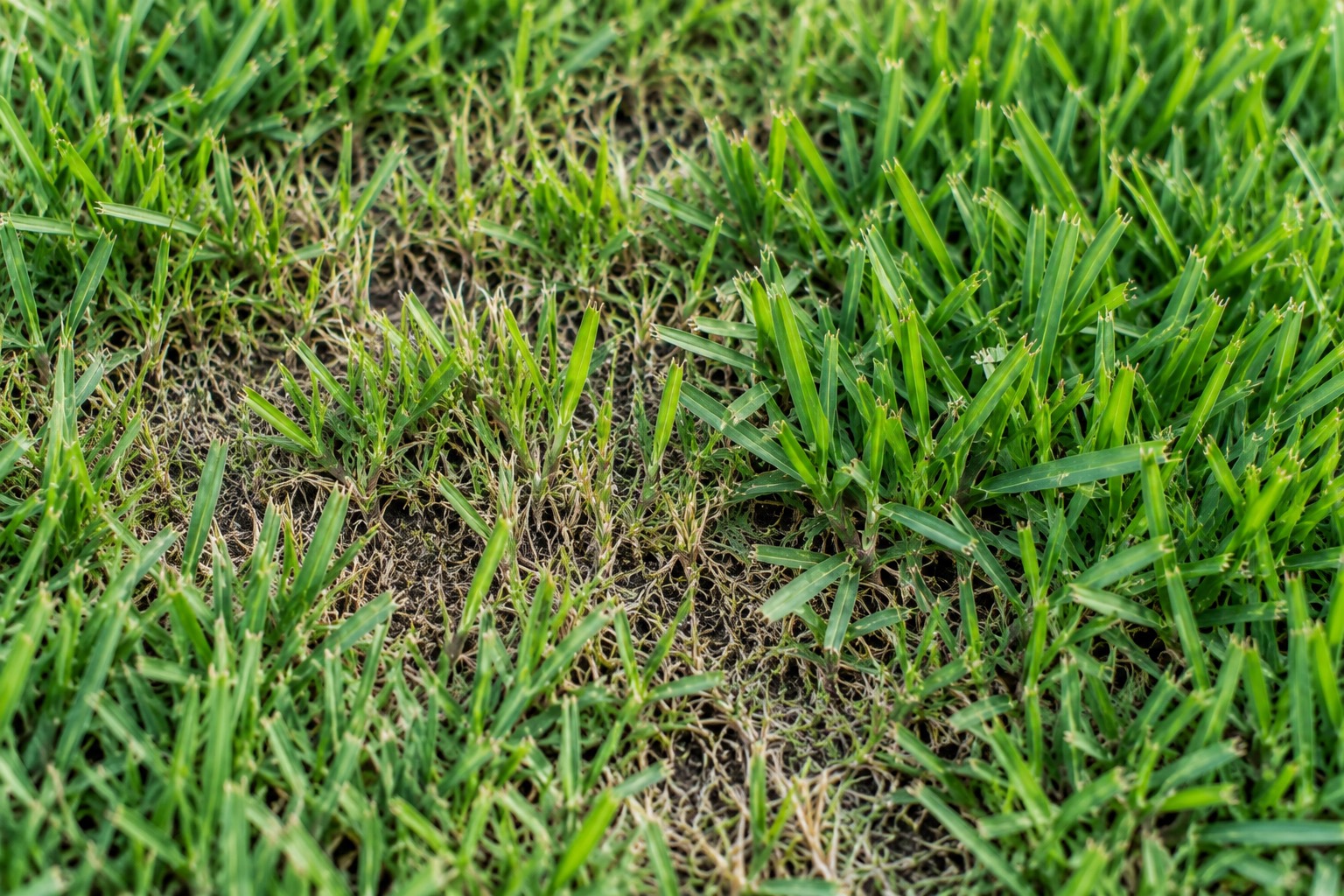
For a lawn with repeated outbreaks in the same spot each year, treating the outbreak is only half the job. Something about that area, often drainage or too much shade, is likely creating conditions the fungus keeps using. That cause is worth fixing separately from the immediate treatment.
How do I treat brown patch on St. Augustine grass?
A fungicide labeled for brown patch or large patch, applied so it reaches the base of the grass blade, combined with switching to morning watering and avoiding overly short mowing during the outbreak.
Should I keep mowing as usual while treating brown patch?
Keep mowing, but raise the height. Cutting St. Augustine too short during an active outbreak removes blade tissue the grass needs to recover, and it makes existing damage more visible since there's less healthy growth around it to offset it.
Can brown patch spread to other parts of my lawn?
Yes, especially if a mower moves from an infected patch to a healthy area without being cleaned in between, since wet clippings can carry fungal spores to new spots.