How to Read Your Lawn Care Quote: What Each Line Item Means
September 26, 2026
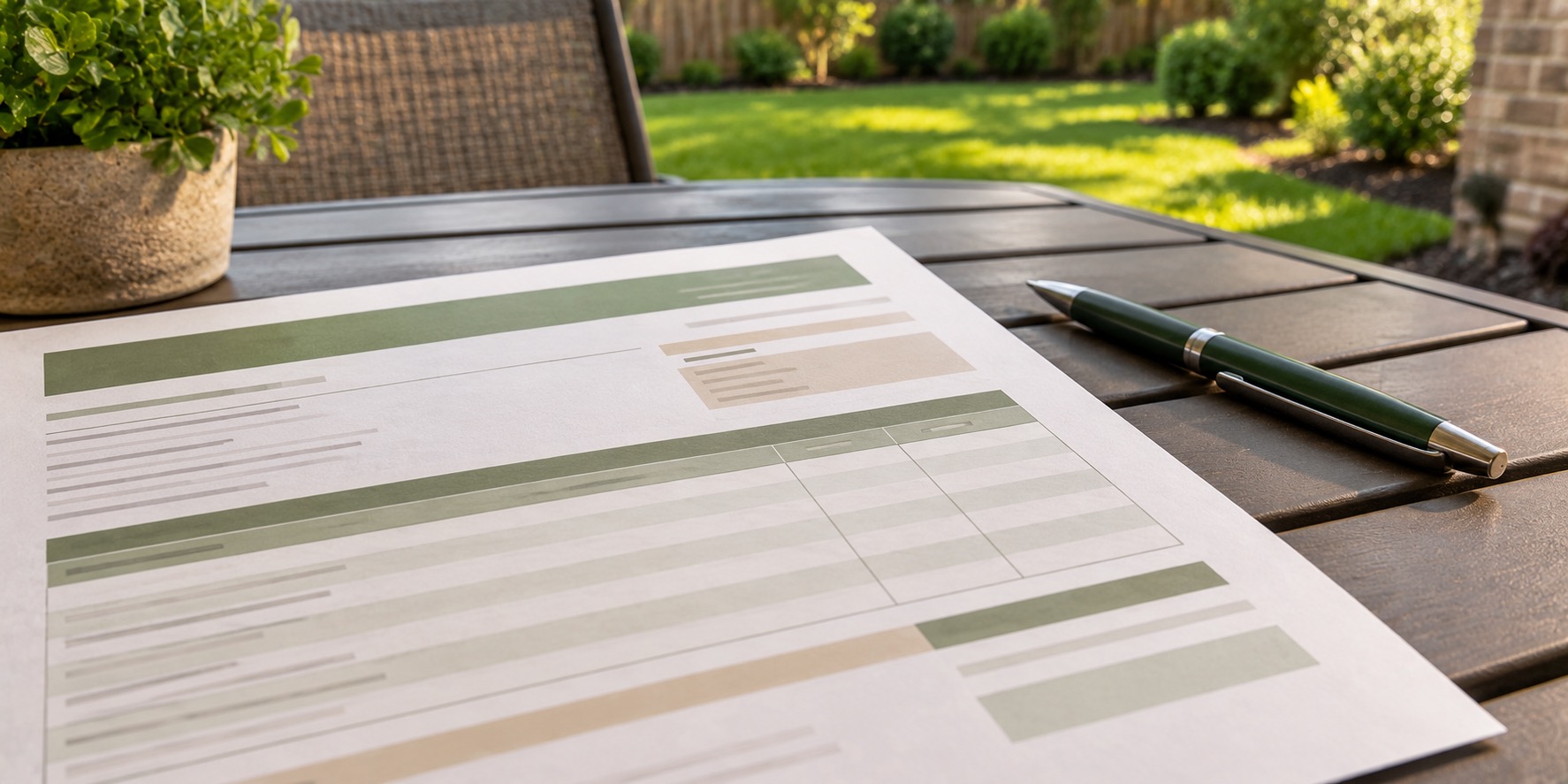
A lawn care quote with several line items can look more complicated than it needs to be. Once the pieces are broken down, most quotes follow a predictable pattern. Knowing what each part means makes it easier to compare offers or spot something that doesn't add up.
The base service charge is the starting point. It's usually tied directly to lot size. This line covers the core visit: mowing, edging, and blowing off clippings, priced by how much area needs covering. A quote that lists this as one flat number, without breaking out size, is harder to compare against a competitor's.
A few real factors move the price away from the base number. Lot size sets the tier. Weekly mowing currently runs from $40 per visit on the smallest lots up to $80 per visit on properties up to an acre. The schedule chosen — weekly, every 2 weeks, or every 4 weeks — changes the per-visit rate too. Check the pricing page for the full table. If the lawn is significantly overgrown at the first visit, about two weeks or more since the last mow, a 15% charge applies to that one visit only. It's shown on the quote page and never added to the recurring rate. A very narrow gate or blocked access may also need a custom quote, confirmed before the first cut.

Sales tax is a real, required line item in Texas for lawn care. It should appear as its own clearly labeled amount. It's calculated as a percentage of the total. A quote with no tax line at all is worth asking about. It may mean tax is being handled wrong, or just not shown clearly.
Add-on services, if any are included, typically appear as their own lines rather than folded into the base rate. Things like a first-visit overgrowth fee, seasonal cleanup, or bed maintenance get priced one at a time. That makes it easy to see what's being paid for beyond the routine mow.
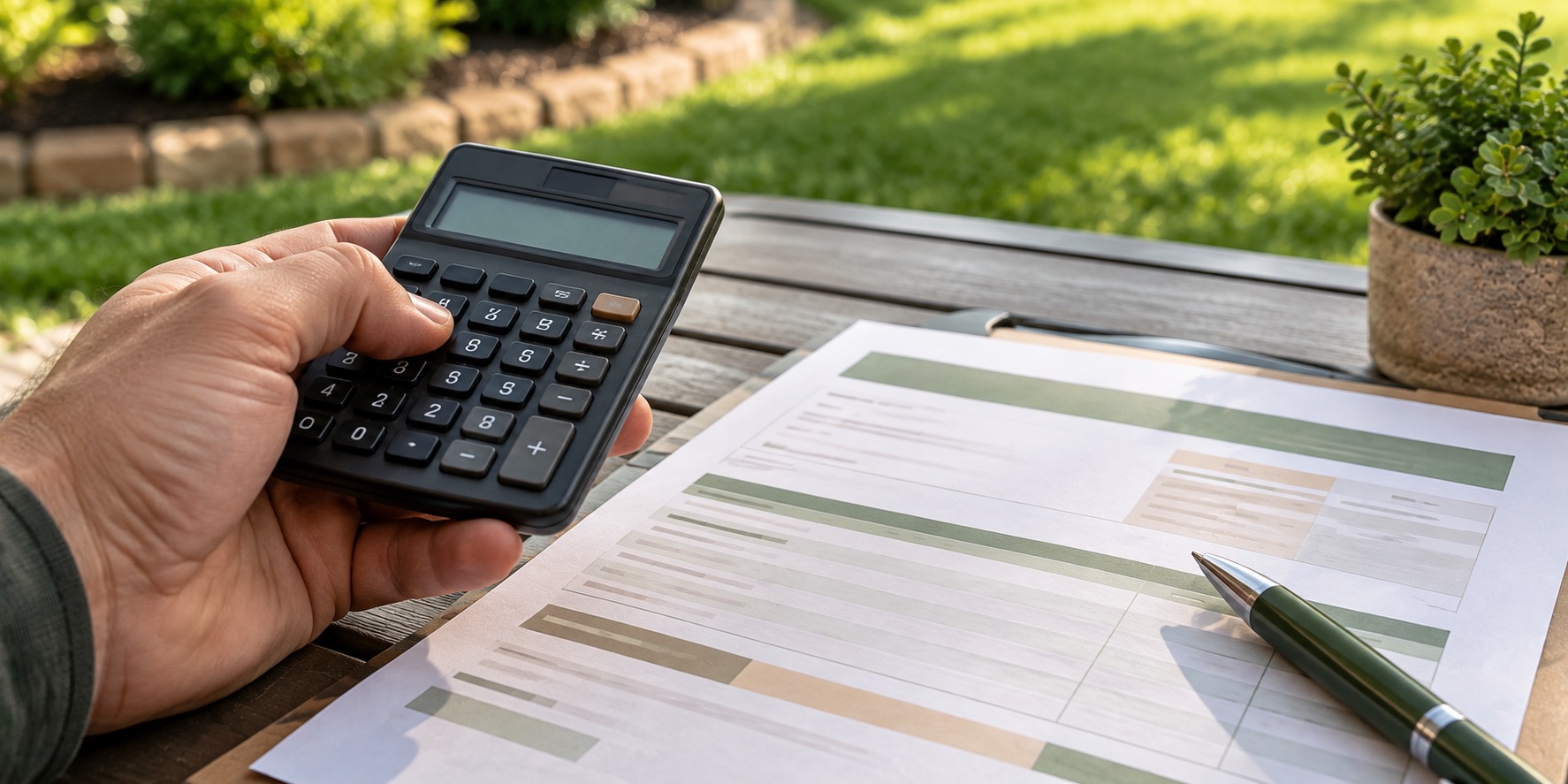
The total at the bottom should equal the sum of everything above it. It's worth checking that math, not just assuming it's right. A total that doesn't match the lines above it, even by a small amount, is worth asking about before agreeing to anything.
A genuinely transparent quote should make sense on its own, with no need to call and ask what something means. If a line item is unclear or unlabeled, that's worth clarifying first. A company confident in its pricing should explain every part of it without hesitation.
What should a lawn care quote actually include?
A clearly itemized base charge tied to lot size and the schedule you chose, sales tax as its own line, and any add-on services listed separately, all adding up to a total that matches the individual lines.
What changes the price on my quote?
Four things: your lot size tier, the schedule you choose, whether the lawn is overgrown at the first visit, and whether access is unusually narrow or blocked. Overgrowth adds a 15% charge on that one visit only. Narrow or blocked access may need a custom quote, confirmed before the first cut.
Should a lawn care quote include sales tax?
Yes. Lawn care services are taxable in Texas, so a legitimate quote should show sales tax as its own clearly labeled line, calculated as a percentage of the service total.